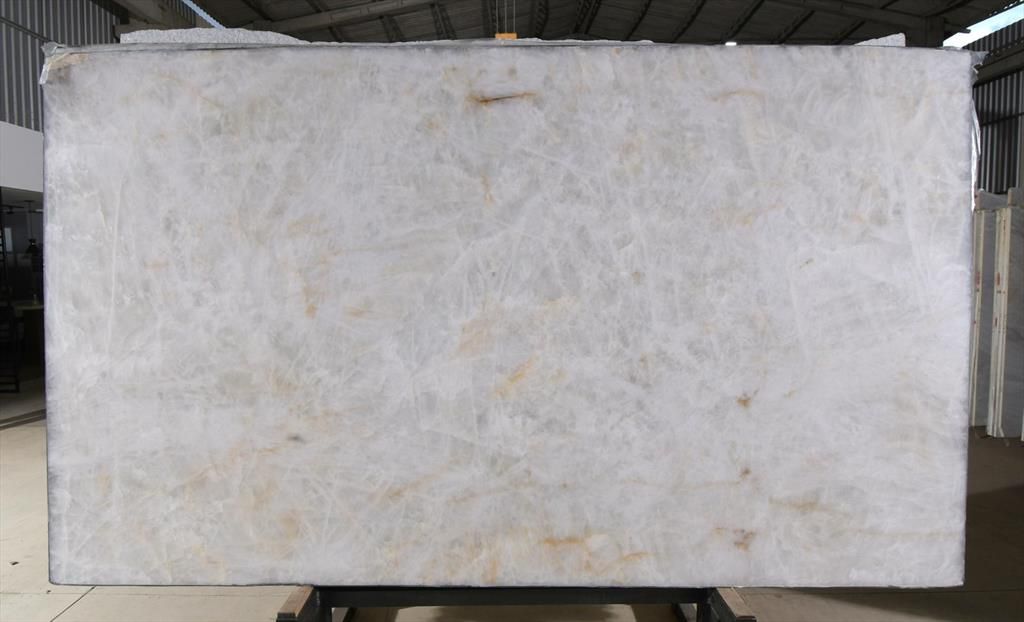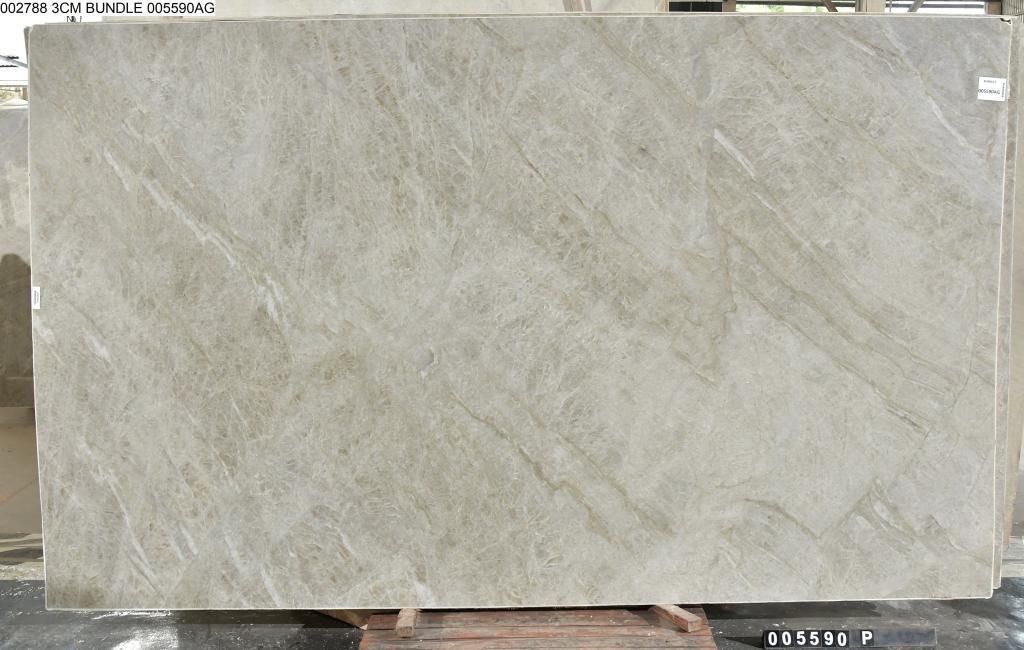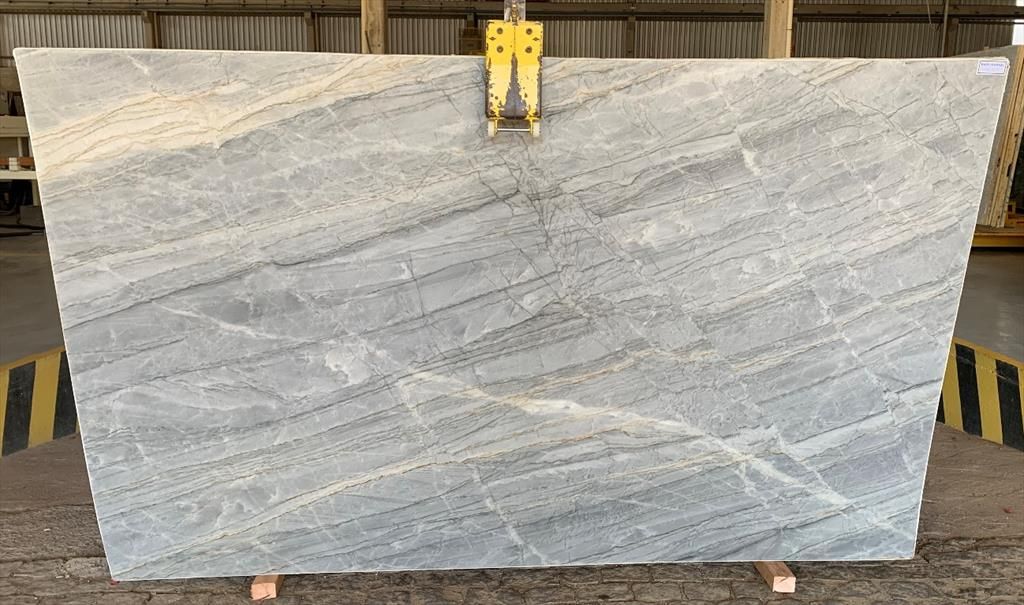
Both are hard, heat-proof, and do not etch — the difference is mostly the look and the price. Quartzite gives you a soft, marble-like look; granite gives you speckled or flowing crystal patterns, generally at a lower price.
| Quartzite | Granite | |
|---|---|---|
| Hardness (Mohs) | About 7 | About 6–7 |
| Etching from acids | No | No |
| Heat resistance | Excellent | Excellent |
| Sealing | Yes, about once a year | Yes — dense granites need little |
| Looks | Marble-like veining, translucent depth | Speckled or flowing crystals, more color range |
| Fabrication | Harder to cut; can be brittle | Easier to fabricate |
| Typical price level | Mid to high | Generally lower |
| Best for | The marble look without the upkeep | Value, bold colors, outdoor kitchens |
Granite is igneous: it cooled slowly from molten rock deep underground, which is why you see distinct crystals of feldspar, quartz, and mica. Quartzite is metamorphic: sandstone that was recrystallized by heat and pressure into one fused mass, which is why it often looks smooth and veined like marble.
Both resist scratches, heat, and acids, and both are excellent kitchen surfaces. Quartzite is slightly harder on average; dense granites are often less porous. Neither etches, which is the big advantage both have over marble.
Most people choose by look. If the inspiration photos are marble kitchens, quartzite gets you there with granite-like toughness. If the client wants dark, bold, or speckled stone — or the budget is tighter — granite delivers outstanding value.
Leave your info — we'll send pricing and photos.
Slightly, on average — quartzite is around 7 on the Mohs scale and granite around 6–7. In practice both are very hard, scratch-resistant kitchen surfaces.
Granite is generally the more affordable of the two, though rare granites like Blue Bahia are among the most expensive stones in the world.
Both benefit from sealing. Quartzite should be resealed about once a year in a busy kitchen; dense granites need it less often.
Quartzite. Its veining and translucent depth are the closest natural match to marble without marble’s etching.